

Two pool quotes for the same yard can look thousands of dollars apart and still describe the same pool, or look close and describe very different ones. The way to compare them is line by line. Here's what each line on a typical new-pool quote covers, what tends to be left out, and what to ask before you sign.
If you just want a ballpark first, our pool cost guide has estimated ranges for Southern California from the same price book our 3D designer uses. This guide is the next step: you have a number (or two), and you want to know what's actually inside it.
1. Design and engineering
This line covers the plan set: a site plan showing the pool, equipment pad and setbacks, plus structural engineering for the shell. Hillside lots, pools near a slope or a retaining wall, and spas raised above the deck usually need more engineering than a flat tract lot. Ask whether a soils (geotechnical) report is included or excluded, because some sites need one and it's a separate cost when they do.
2. Permits, HOA submittal and fees
A new pool needs a building permit from your city, or from the county in unincorporated areas. The quote should say whether permit fees are included or passed through at cost, and who prepares the drawings. If you're in an HOA, ask whether the builder prepares the architectural submittal and how many revisions are included. Our guides on pool permits and HOA approval explain both steps in Riverside County.
3. Excavation and haul-off
Digging the hole is one line; getting rid of the dirt is often another. Look for both. Tight side yards that limit equipment size, rock that needs a breaker, and long carries to the street all add time. A good quote either includes a rock clause with a stated rate or says plainly that rock is excluded, so you know where the risk sits.
4. Steel and forming
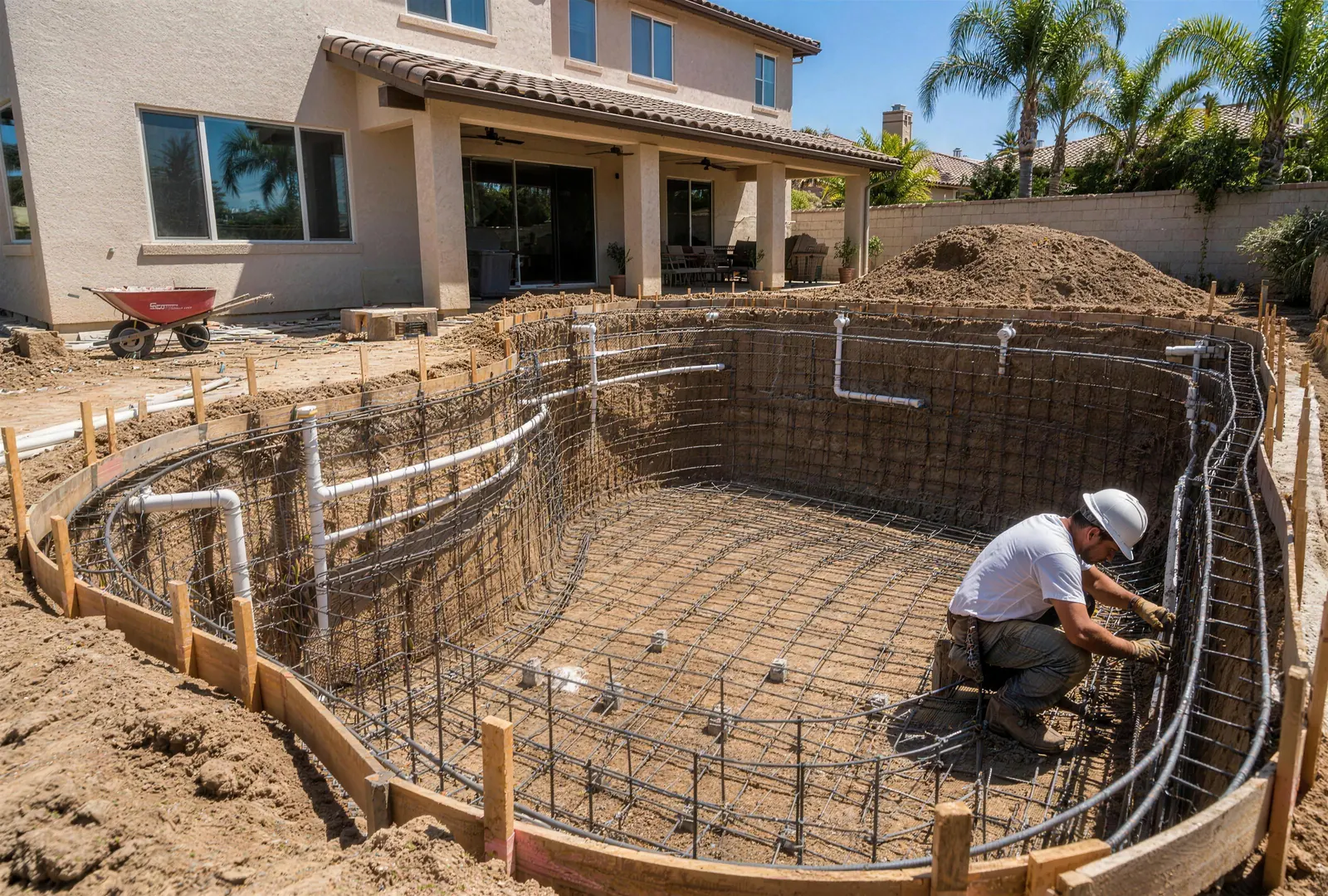
Rebar is tied into a cage that follows the pool's shape, and organic shapes like freeforms and lagoons take more labor to form than a rectangle. You won't usually see a dollar figure for steel by itself, but the steel schedule should come from the engineering plans, and the city inspects it before any concrete goes in.
5. Plumbing and the equipment pad
This covers the suction and return lines, skimmers, main drains, the equipment pad and the run between pool and pad. The distance matters: a pad tucked against a side wall far from the pool means longer trenches and more pipe. Ask how many returns and skimmers are planned, whether the pad location is shown on the plan, and whether a gas line for a heater is included or a separate item.
6. Electrical
Pumps, lights and automation need power and bonding, and that work has its own inspection. Some pool builders include it; others list it as an allowance or exclude it and use your electrician. If there's an allowance, ask what happens if the panel needs an upgrade, because that's the most common surprise on this line.
7. Shell (gunite or shotcrete)
The concrete shell is the structure of the pool. Quotes usually price it by the pool's size and shape, and they should name the process and the specified strength from the engineering. Spas, raised walls, benches and sun shelves all add shell work, so check that the features you discussed are drawn on the plan the quote refers to.
8. Tile and coping
Waterline tile and the coping (the cap around the edge) are usually priced from a standard selection. Upgrading to glass tile, natural stone or a larger-format coping changes the line. Ask what the standard selection actually is, so you're comparing like with like between builders.
9. Interior finish
White plaster is the baseline in most quotes. Quartz and pebble finishes cost more up front and generally last longer, and they change the water color. The quote should name the finish product, not just "plaster". If you're deciding between finishes, our remodel and resurfacing page explains the trade-offs.
10. Deck
Many base quotes include only a narrow deck around the pool. Check the square footage. A bigger patio, travertine or porcelain pavers instead of broom-finish concrete, and steps or seat walls are where totals grow quickly. If two quotes differ a lot, this line is often why.
11. Equipment
Pump, filter, sanitizer, lights, heater and automation. The quote should list makes and models, not just "equipment package". New pool installs in California generally use variable-speed pumps. Heaters, salt systems, automation and an automatic safety cover are common add-ons, and each should be a visible line if it's included.
12. Safety features
California requires new residential pools to have at least two of the listed drowning-prevention features, such as an isolation fence, a safety cover, or alarms on doors to the pool area. Make sure the quote says which two (or more) are included. If it's silent, it's probably not included, and it's not optional.
13. Start-up and handover
Filling, initial chemical balancing, plaster start-up and a walkthrough of the equipment. Ask who brushes the new plaster in the first days, who provides the water (you usually do), and when weekly service should start. If you want help after handover, see what weekly pool service includes.
What's usually not in a quote
- Landscaping, irrigation changes and repairing lawn or planters damaged by access.
- Fencing or gates beyond the safety features named in the contract.
- Soils reports, survey work or a retaining wall, unless the plans already call for them.
- Electrical panel upgrades and long gas runs.
- Outdoor kitchens, pergolas, fire features and lighting beyond the pool.
- HOA fees or deposits, and any utility or water-district charges for filling.
Allowances, exclusions and change orders
An allowance is a placeholder amount for something not yet chosen, like tile or a heater. It's fine as long as you know the number and what happens if you go over. Exclusions are things the builder isn't pricing at all. Change orders cover anything you add or change after signing; ask how they're priced and that they're in writing before work changes.
The payment schedule
California limits the down payment on a home improvement or swimming pool contract: for pools it's 2% of the contract price or $200, whichever is greater. After that, payments should follow completed work (excavation, steel, shell, tile and coping, plaster), not run ahead of it. A schedule that asks for a large share before anything is built is a red flag. Our guide on checking a pool contractor covers the other contract basics and how to verify a C-53 license.
How to compare two quotes
Put them side by side using the lines above. Mark every line as included, allowance or excluded. Then compare deck square footage, the equipment models, the finish product and the safety features. Most of the gap between two quotes usually shows up in those few lines, not in the shell.
Free 3D designer. Estimate before you share your number.
Before you get quotes at all, it helps to have a design and a realistic range in hand. Put a pool in your own yard with the 3D designer, check the ranges on our pool cost guide, and run the monthly math on the financing page. When you're ready, a licensed partner builder can walk the yard and put a price in writing.
By the Coastline Pools team · Published November 12, 2026 · Last reviewed November 12, 2026. General information, not legal or financial advice.